

Talk, draw, discover, record: natural learning tools
Reclaiming childhood learning through conversation, observation, and hands-on curiosity

We worry a lot about literacy in the homeschool world: how important it is, what literacy resources we should use, how it happens, what we need to do is if it happening when it should, etc. And yet so much of that worry comes from a system we’ve walked away, having decided it wasn’t meeting our needs.
The pressure to read and write early isn’t born from childhood itself, but from a system of schooling that needs children to learn in a particular way, on a particular schedule. When we step outside that system, the whole picture of what learning is, and how it unfolds, shifts dramatically.
Schools put such heavy emphasis on reading and writing in the early years. There’s a valid there’s a reason for that. If a child in the system isn’t reading or writing by about age eight, they’re at risk of “falling behind.” Because in school, falling behind is an actual thing. A measurable category. A looming threat. It’s not something we come across in homeschooling land all that often.
There’s a lot of content children are expected to absorb before they can graduate childhood. (Yup, I can’t believe I said that… graduate. Kids “graduate” primary school nowadays. I’ve even read about kids “graduating” preschool. Oh dear. Let’s all pause and shake that off.)
Anyway, school takes this thing we call learning and clumps it together into what they call a curriculum, then chops that up into segments they call subjects or learning areas, and parcels it out as discrete lessons. The only way a teacher can effectively check whether thirty children have achieved the prescribed outcomes in those discrete lessons is by coercing the kids to complete worksheets, assignments and tests which can appropriately be marked, graded, and ranked.
That system depends entirely on kids becoming reasonably competent readers and writers by around age eight. Which is why early childhood classrooms lean so hard on literacy drills (instead of play, but that’s a rant for another day).
I’m a reader. I love reading. I’d spend all day reading if I could. And I love writing more.
But plenty of people don’t, including most of the kids I know. If you take away the compulsion to read because they’re at school, most kids would choose not to read at all. Even more would choose not to write. They’d see no reason to.
It’s a dilemma we homeschooling parents have to face, more or less continually throughout our kids’ homeschooling lives. Of course, there is always that one kid, like me, that would happily spend all day writing, whose mum would chide her for forever having her face stuck in a book. The sad fact is, that one child is held up, not only as desirable, but also as ‘normal’ in our society, with anything less than that seen in the school system as problematic and probably diagnosable.
The way I see it, reading and writing are wonderful ways to gather and share information, but they’re not the only ways. They’re actually quite new additions to humanity’s communication toolkit.
For most of human history however, conversation and story-telling were, and I believe still are, the most significant communication tools we use in our lives.
Talking about what we've experienced, or observed, requires little effort and is something we all do naturally. Especially children.
Early British educator and school reformer, Charlotte Mason championed the art of narration, that is, the retelling what we’ve read, witnessed or taken part in. Retelling helps us to make sense of our experiences. Narration starts simply, at the child’s level of understanding, and grows slowly over the years until it becomes a sophisticated ability to comprehend, reflect, synthesise and articulate our thoughts.
Most parents help their children develop this skill naturally, helping them put words to their experiences, strengthening their language skills, inviting them to be part of home and community life through conversation. It’s an important way humans learn.
For me, narration also echoes a permaculture approach to living: I often fall back on permaculture principles to guide my choices as an educating parent. Most people think of permaculture as something that belongs outdoors, in the garden or for agriculture, it’s really a design system for living well. Its ethics and principles apply everywhere.
In Permaculture: Principles & Pathways Beyond Sustainability, David Holmgren reminds us to experience life first-hand, to observe and interact, rather than passively ingest the packaged experiences of others. It fits well with an unschooling or self-directed learning approach to life.
Respectful listening and open-ended questions are two tools that nurture these observational and narrative skills. And questions, when phrased and used well, are definitely not mini-tests to gauge comprehension. They’re invitations. They create scaffolds for deeper understanding and spark further curiosity. Slowly, gently, they help a child notice more, remember more, and think more deeply.
Recording our observations is one of the oldest human habits we have. We’ve always left marks for others to decipher and decode: on cave walls, on bark, material and paper. We seem driven to communicate our experiences and thoughts.
Children, of course, are masters of leaving their mark: chocolate handprints, chalk drawings, enthusiastic scribbles. Their early symbols are powerful expressions of thought and emotion.
A century or two ago, the ability to draw accurately was considered an essential element of education, as important as the ability to read and write. Early explorers didn’t just write about the environment they passed through, they drew it, their notebooks annotated not only with maps but illustrations. A picture paints a thousand words, after all.
Drawing has benefits beyond artistic ability, and regular drawing practice strengthens far more than artistic skill. Try sketching a bowl of fruit: entire regions of your brain engage to coordinate sight, memory, hand movement and spatial reasoning. You can’t rush it. It’s slow, attentive work: exactly the kind of work we associate with learning.
Keeping a nature journal, another one of the tenets of a Charlotte Mason approach to home education, is a potent way to blend observation with recording. And for homeschoolers, it helps that it manages to cover learning across different curriculum areas without feeling like “schoolwork.”
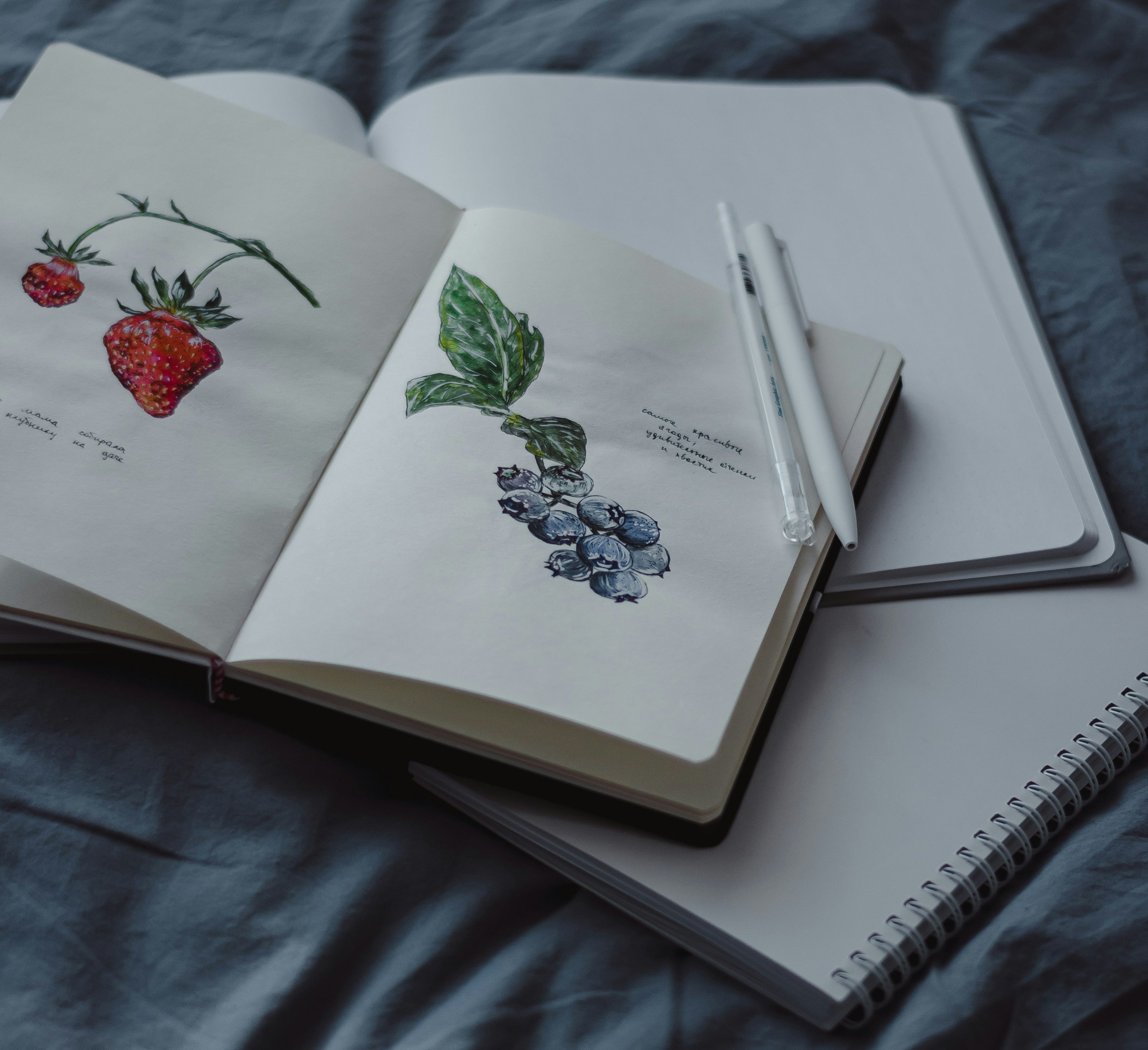
There are other simple ways we can help our children combine “observe and interact” and develop a habit of recording their experiences and thoughts. Here’s a few I thought of and I’m sure you could add many more:
growth charts: we once made a giant monthly calendar on a large sheet of cardboard and our six-year-old daughter drew something from each day and once a week wrote measured and recorded her height.
keeping a weather chart: noting cloud patterns, rain, temperature, and wind.
personal growth journal or diary (please respect your child’s privacy and not read it);
action plans: lists, menus, birthday wish-lists, holiday itineraries, garden plans.
gardening diaries: records of what we're planting, how they're growing and changing, and harvest quantities, types, etc.
shopping lists and menus, personalised recipe books.
identification charts: you can create your own field guides for identifying birds, insects, invertebrates in your backyard or area, rocks you find, etc.
recording ‘science’ experiments: potions, slime, marble races, seed sprouts, etc.
make their own “how to” videos or infographics: clear communication plus creativity, all wrapped in one.
Observation, interaction, storytelling, drawing, reflecting: these are the foundations of learning. Reading and writing will come. They always do when a child is immersed in a world where ideas matter, where curiosity is welcomed, and where communication takes many forms.
In homeschooling, no one “falls behind.” We simply walk alongside our children, taking the time to really see what they see, patiently assisting our children as they learn and grow.

I’m dropping Notes most days and would love to connect with you that way. Don’t forget we can keep the conversation going on any of my posts by adding a comment on any of them too.
Subscribe to my newsletter and you’ll never miss an update: every new post is sent directly to your email inbox. Free or paid, you’ll still get at least one email each week. My regular posts won’t ever be behind a paywall.
Whatever your approach, your lifestyle or education philosophy, I’m here to support you. Take what you need, leave the rest. I want you to lean on my experience because I’ve leant on others — we are in this together, growing and learning from each other!
That’s all for now! Until next time, Beverley
Looking for information on how to start homeschooling and where to find Australian curriculum suppliers and providers? Download my FREE comprehensive guide today!
Here’s what you can expect from my regular Substack newsletter:
Themed Weekly Focus: Each week has a clear focus, helping you strengthen key areas of your homeschool without feeling scattered.
Encouragement for the Hard Days: Because we all have them, and sometimes a fresh perspective is all we need.
Practical Tools & Ideas: Information about homeschool resources, hands-on activities, exclusive templates, and ways to simplify planning.
Real Talk About Homeschooling: Honest discussions about the challenges and triumphs from someone who has been there and done that, and whose kids are now homeschooling theirs!
To my paid subscribers, who receive my exclusive Monthly Free Resources Round Up Newsletter, homeschool templates, checklists, unit studies, infographics, e-books and more, I can’t thank you enough for supporting my work!
Thanks for this great post. Loads of helpful advice here, even for those of us who aren't homeschooling our children.
And I'm definitely going to be encouraging mine to think about using a nature journal if it's something that they'd like, which I think that it is. Also, I had no idea that permaculture could be used in this way to reflect upon education. I'm definitely going to be looking at that with a keen eye as well.
Thanks again for an interesting post.