

Are We Doing Enough?

Every home educating parent worries about this at some point.
Am I doing enough? Am I doing it right?
What we often forget is that what works for one family, or even for one child, won’t necessarily work for another. There isn’t a single right way to educate a child. Parenting individual human beings is always a living experiment: adjusting, observing, trying again. Home education is no different.
Even now, with adult children, I still catch myself wondering if I did enough. Then I remember that I was always doing the best I could with what I had at the time. Sometimes that was inadequate, but not through neglect or lack of care.
Life intervened. Health problems took centre stage. Money wasn’t always there to support the choices we might have preferred to make. So we adapted. We worked around our limits and built on the opportunities that were available. And there were many, far more than we could ever fully use.
Over time, I came to see that a busy, productive home life is an education in itself.
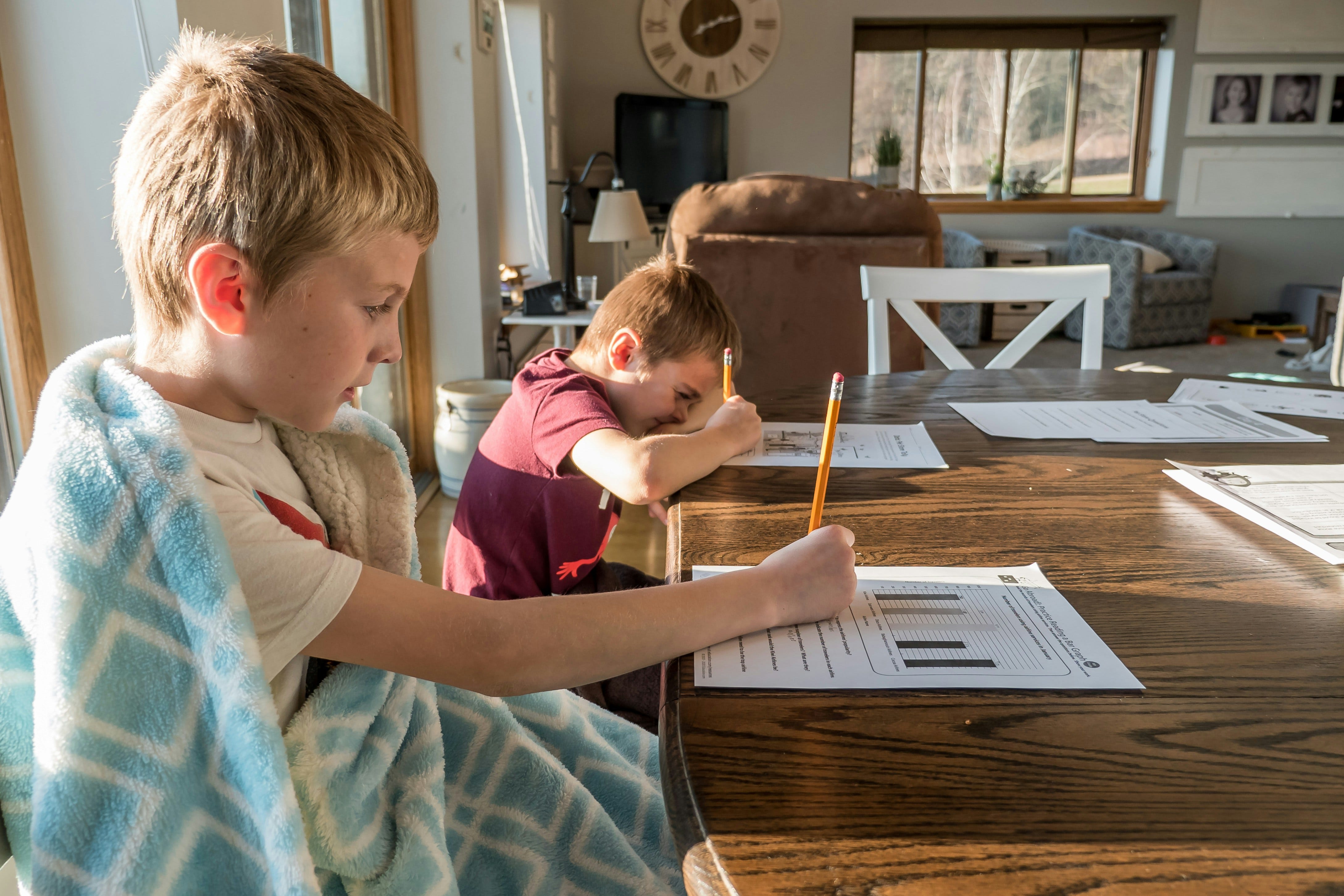
My role wasn’t to replicate school, but to support learning as it arose. When a child needed to understand percentages, or exchange tens for units, or calculate the area of a circle, we learned it together. Out came a maths dictionary, maybe a textbook or workbook, and we figured it out side by side.
Sometimes I would recognise that the children needed a skill (which in our home we call 'tools' for living) ahead of need and then I'd create an opportunity for them to come across it, usually through play, board/card games or art/craft activities. Designing, making and creating were constant activities in our home, and without trying, it covered a surprising amount of what schools call “the curriculum.”
This flexible and responsive way of learning gave me the reassurance I needed. When doubt crept in, I’d document what our days actually looked like and sometimes translate those notes into educational language. Not to prove anything to others, but to remind myself that learning across the curriculum was happening — holistically, deeply, and in context.
And yet, doubt has a way of sneaking back in.
Sometimes it’s fuelled by homeschool groups, books, magazines, blogs, and social media. When we’re immersed in other people’s ideas and experiences, it’s easy to build an unrealistic picture of what home education should look like.
Wow, we could be doing that.
If only we lived closer.
If only we had more money, more time, better health.
Every day the internet throws a gazillion brilliant ideas at us tempting and taunting us. Do more, they whisper.
This is your reminder to pause.
Relax. You are doing enough. In fact, you might even consider doing less.
When you feel that familiar tightness, that sense of being behind, overwhelmed, or on the brink, stop before it tips too far. Take a few minutes to ground yourself. Move gently through your senses. Notice what you can see, hear, feel, touch, smell, and taste. Take a slow breath in and let it out fully. Stretch tall. Touch your toes. Wave your arms. Wriggle. Breathe again.
These are simple things. And like most simple things, they’re the hardest to remember when we’re busy.
Grounding ourselves gives us energy. It helps us work efficiently and in balance. When we’re grounded in our bodies, we remember who we are — not who we think we should be, or who others appear to be online. We remember what needs doing, not what we feel pressured to do.
As home educating parents, we work hard to remove unnecessary pressure from our children. We make space for them to be themselves, rather than living up to expectations that don’t serve their development or learning.
We need to ensure we do the same for ourselves.
Sharing ideas and information is the lifeblood of any support group. But if we aren’t grounded in who we are, and what our family actually needs, those same ideas can quietly undermine our confidence.
For years, without realising it, I compared myself to other home educators. Sometimes I felt reassured, but more often I felt inadequate, as though I should be doing more.
This is why I encourage parents to write a simple mission statement, that sums up your personal homeschooling philosophy. It should include what education means to you, and what you hope to achieve by home educating your children.
It’s also why I encourage parents to get to know their children’s learning styles and preferences, not simply by reading about them or doing quizzes, but by closely observing your children and how they work and play. Base your homeschooling activities on that understanding.
I used to reread my philosophy statement whenever I felt frantic (often on the days I found myself threatening to send the children to school!). It brought me back to centre. It reminded me why we were doing this.
All the resources, programs, methods, and ideas out there really are wonderful. They’re the cream on the cake. But family, home, and community—that’s the cake itself. A rich education can be built simply by living fully and attentively together.
When we strip away hours of meaningless busywork and crowd-management tasks, we give children the one thing they truly need in order to learn anything: time.
So relish the time you have together. Don’t fill it with things that don’t serve you or your children.
“Enough” was never about doing more.
Instead it was paying attention, responding with care, and trusting that a life well lived is already full of learning.
Today’s post is is a reworking of an original post first published on my The Educating Parent website.
I’m dropping Notes most days and would love to connect with you that way — you can add a comment or like. Don’t forget we can keep the conversation going on any of my posts by adding a comment there too.
If you’re homeschooling in Australia, don’t forget to download my FREE Resource Directory for a bumper list of educational and curriculum providers and suppliers, as well as comprehensive guide on getting started how to register as a home educating family.
Whatever your approach, your lifestyle or education philosophy, I’m here to support you. Take what you need, leave the rest. I want you to lean on my experience because I’ve leant on others — we are in this together, growing and learning from each other!
To my paid subscribers, who receive my exclusive Monthly Free Resources Round Up Newsletter, plus the occasional free homeschool templates, checklists, unit studies, infographics, e-books and more, I can’t thank you enough for supporting my work!
That’s all for now! Until next time, Beverley
This is good advice for parents who send their children to school, too. But I also believe that parents who choose to homeschool are pressured more than public or private school parents, which isn't fair. Cheers to all parents who do their best every day!
I relate to every word of this!